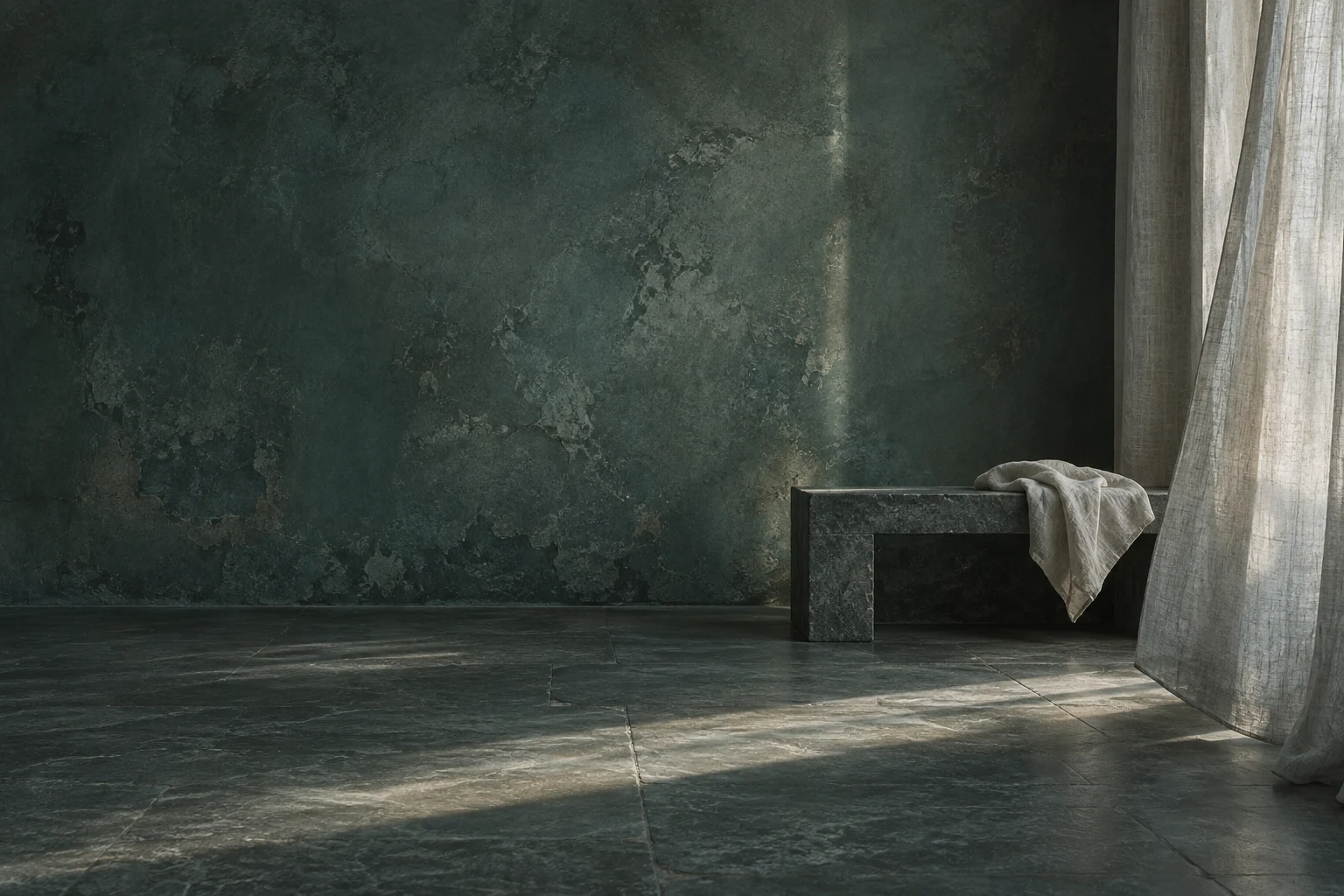
There is a moment after someone leaves when a room still seems arranged around them. The chair is turned a little towards the window. A page has been folded. The air has not quite caught up.
Nothing remarkable has happened. And yet the room is different from a room that has always been empty. It contains a direction of attention. You look towards the doorway without knowing why.
What remains
Absence begins here: with the small interval between a presence and its disappearance. We imagined no face, no name, no particular afternoon. Only a handful of details that might belong to anyone.
Paper, held for long enough to lose its chill. A sleeve against bare skin. The pale dust of iris. Cedar at the edge of a room, with a trace of incense that seems to have arrived from somewhere else.
A trace can be more vivid than the thing that left it.
Leave room
The temptation is to explain everything. To supply the person, the place, the reason for leaving. But the moment becomes smaller when every detail has a name.
So we leave room. For a memory that may not be yours. For a feeling you recognise without being able to place it. For the possibility that familiarity is something we can invent together.
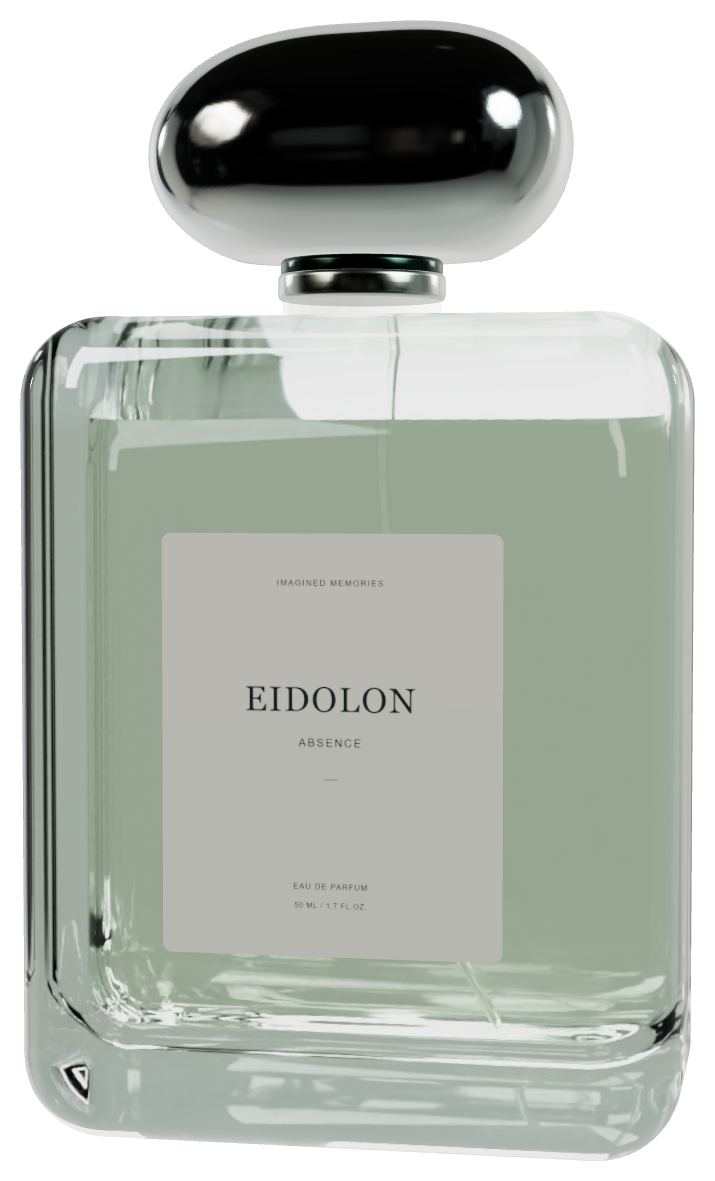
This is the world of Absence. Quiet, close to the skin, and unfinished in the way a good memory always is.
E